Have you ever checked your account balance on a random Wednesday evening and just sighed? You say to yourself, “But I didn’t even buy anything this week, so why is my money disappearing?”
Then you remember Netflix auto-renewed. Spotify took its share. Your Canva deducted. And your data plan quietly chipped away at the rest. That’s how subscriptions work: silent killers of your budget.
In Nigeria today, many of us are subscribed to multiple services simultaneously, both local and international, from entertainment like Netflix and Showmax, to music apps like Apple Music, Spotify, and YouTube Music, to “serious” tools like Canva, Google Drive, and LinkedIn Premium. To top it off, we still have to deal with cable TV, data bundles, and even those sneaky app trials that renew when you forget to cancel.
It adds up quickly. And the worst part? Because these charges are automatic, most people don’t actively think about them when planning their monthly budget. That’s why so many young Nigerians are now Googling things like “track subscriptions Nigeria” or “subscription tracker app.” They want to know how to manage my money, keep tabs on recurring payments, and avoid ending up broke by mid-month.
That’s exactly what we’re going to unpack here. I’ll show you
- Why subscriptions quietly ruin budgets
- The best ways to track subscriptions in Nigeria
- How to use a subscription tracker app like Moniger to stay ahead
- Practical tips to budget for recurring payments without stress
Let’s break it down together.
Why Subscriptions Quietly Ruin Your Budgets
On the surface, subscriptions seem harmless. ₦1,200 here, ₦2,700 there—it doesn’t feel like a lot. But when you add them all up? It can be shocking.
Here’s why they’re dangerous:
- Auto-renewals are sneaky
Once you put in your card details, the app doesn’t need your permission again. That ₦2,500 will keep disappearing every month, whether you’re using the service or not, and at the end of the month, you realize you’ve spent ₦50k+ on subscriptions alone. That’s the problem with recurring payments—they don’t look dangerous individually, but combined, they can swallow your savings. - FX Fluctuations (Dollar vs. Naira)
If your subscription is charged in dollars, you’re not just paying for the service. You’re also paying for FX fluctuations, VAT, and sometimes even bank charges. That’s why many Nigerians feel like subscriptions “ambush” them. - No central overview
You know you have subscriptions, but can you list them all off the top of your head? Most people can’t. They only remember when the debit alert hits them on a random day. - Impulse sign-ups
How many times have you signed up for a free trial and forgotten to cancel? Next thing, boom—a debit alert. That’s how brands make their money. They bank on you forgetting.
Why You Need a Subscription Tracker App
You’re smart, but you can’t outsmart subscriptions by just “trying to remember.” Life is too busy. That’s why you need a subscription tracker app.
Track Everything in One Place
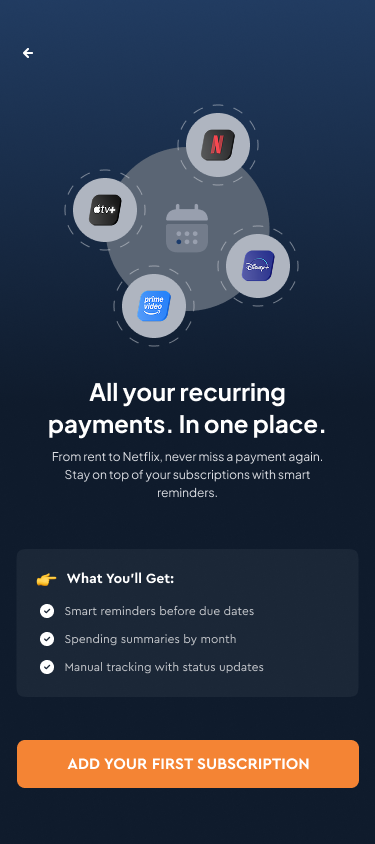
Instead of waiting for bank debit alerts, a tracker shows you every subscription you have—Netflix, Apple Music, MTN data bundles, gym memberships—all in one dashboard.
Get Alerts Before You’re Debited
Imagine if your phone warned you: “Hey, your Showmax subscription is renewing in 2 days.” That gives you time to cancel or budget. You’ll no longer have to worry about losing your last cash to unnecessary renewals.
Strengthens Budgeting
Good trackers don’t just tell you what’s coming—they help you budget. You can set aside money for subscriptions monthly, so you don’t get caught off guard.
The Subscriptions Nigerians Forget They Have
Quite frankly, we all love enjoyment. That’s why subscriptions thrive. But in Nigeria, some subscriptions are extra popular—and extra easy to forget.
Here are the usual suspects you can plan to take charge of:
- Entertainment: Netflix, Showmax, Prime Video, YouTube Premium.
- Music: Apple Music, Spotify, Boomplay.
- Productivity/Work Tools: Canva, Google Drive, Microsoft Office 365, LinkedIn Premium.
- Learning Platforms: Coursera, Udemy.
- Mobile/Internet: Data plans, WiFi subscriptions.
- Others: iCloud storage, password managers, gym memberships, and Cable TV.
Now, imagine you’re subscribed to just four of these at ₦3,000 each. That’s ₦12,000 gone—every single month. In a year, that’s ₦144,000. And many people are subscribed to more than four.
Managing Subscriptions in Nigeria: The Challenges
Dollar Payments
Many global apps don’t charge in naira. So you’re at the mercy of the exchange rate. What used to be affordable last year is now ‘premium luxury’.
Multiple Accounts, Multiple Confusion
Some of us use multiple bank accounts—GTB, Zenith, Kuda, Opay, and it’s easy to lose track of which account will be debited.
Lack of Transparency
Banks don’t always give you clear info. You’ll just see “Intl. Debit: -₦7,420” without knowing which subscription it was. It’s almost as though you have no control over subscriptions.
Moniger’s Subscription Tracker Puts You in Control
The best part of all this is that you don’t have to manually check each app or scroll endlessly through your bank statement. Moniger has made it ridiculously easy.
Here’s how it works:
- Open Moniger → Go to “Subscriptions” tab: Tap ‘Add first subscription’ and proceed to add a new subscription.
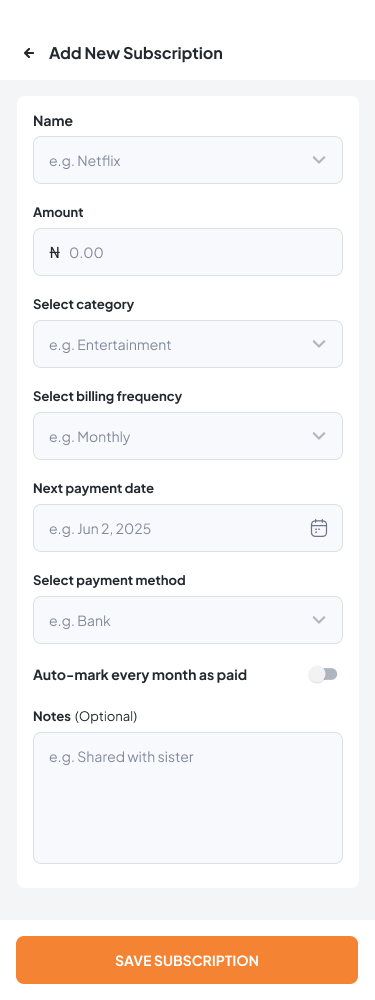
2. Add New Subscriptions: Explore popular subscriptions and choose a subscription you’d like to purchase and track.

3. View In One Place: Once your subscription has been set, you can find all your subscriptions in one place. You can now pause, track or allow moniger to send you reminders until your payment is due.

Practical Tips to Take Control of Subscriptions
Now that you can actually see all your subscriptions in one place, the next step is deciding what to keep or cancel. Here’s how to do it without stress:
Audit Your Subscriptions Monthly
Sit down once a month and check: “Do I still need this?” If you’re not using that LinkedIn Premium, cancel it.
Downgrade Instead of Canceling
Can’t afford Netflix Premium? Drop to Basic. Small changes make a big difference.
Pay Yearly (If You Can Afford It)
Some apps give you a discount if you pay yearly. Instead of $10/month, you might pay $90/year. That’s $30 saved.
Prioritise income seasonality
If you’re freelancing and income is irregular, cancel or pause subscriptions during low months. You can also switch to family plans and split costs, or choose one duplicate; why use two music apps simultaneously?
Use Moniger to Stay Ahead
Instead of trying to do all this in your head, let Moniger handle the heavy lifting. Think of it like your money buddy with expertise in financial advisory.
Why Subscriptions Will Only Increase (And Why You Need Moniger Now)
More brands are moving to subscriptions—Microsoft Office, Adobe, even Canva. Instead of one-time payments, they prefer recurring payments. That means if you don’t take control now, your finances will always feel “tight.”
Moniger is built for this reality. It’s not just a fintech solution; it’s the answer to financial chaos.
Common Questions Nigerians Ask About Subscriptions
“How do I track all my subscriptions in Nigeria?”
Use a subscription tracker app like Moniger that links your bank accounts and shows everything in one place.
“How do I stop Netflix from charging me?”
Go into your Netflix account settings and cancel auto-renewal. But if you’re using Moniger, it’ll remind you before renewal hits.
“What’s the best way to manage multiple subscriptions?”
Create a subscription budget. Decide how much you’ll spend monthly and stick to it. Moniger helps you enforce this.
How to Build a Subscription Budget
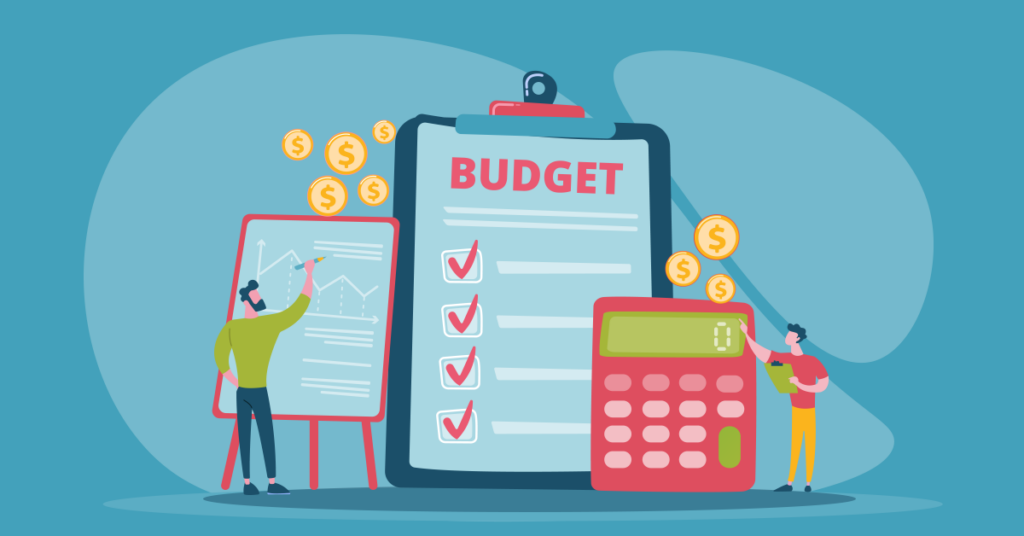
Subscriptions aren’t evil. In fact, they can be great value for money if you manage them intentionally. The trick is to budget for them like rent or electricity.
Here’s a simple formula:
- Set a monthly cap
Decide how much of your income you’re willing to dedicate to subscriptions. Example: ₦10,000. - List out essentials
Music for work? Keep it. Canva for a side hustle? Keep it. Gym subscription you never use? Cancel it. - Automate reminders
With Moniger, get alerts before each renewal so you can decide whether to allow or cancel. - Review quarterly
Your needs change. Maybe you don’t need Coursera anymore, but you now need Adobe Creative Cloud. Adjust accordingly.
This way, your subscriptions work for you, instead of the other way round.
Pro Tips for Nigerians Dealing With FX Subscriptions
Because many apps charge in dollars, Nigerians face unique challenges. Here are some hacks:
- Use virtual dollar cards
Control what gets deducted by only funding the card with what you want to spend. - Switch to cheaper alternatives
For example, YouTube Music or Showmax instead of Spotify or Netflix. - Leverage student discounts
Apps like Spotify and YouTube Premium offer discounted student plans. - Prepay during low FX rates
Some services let you pay annually. If the exchange rate drops, that’s the time to lock it in.
Moniger helps here by tracking both the Naira value and the original dollar price, so you don’t get confused.
Budget for the Bigger Goals
This is the part most people miss. Subscriptions aren’t just about entertainment or work; they’re part of your whole money story.
- If your goal is to save for japa, you need to cut back on unnecessary recurring payments.
- If you want to build savings habits, Moniger can help you track subscriptions and redirect leftover money into savings.
- If you’re tired of living paycheck to paycheck, managing recurring debits is step one.
Start Taking Back Control of Your Wallet
You’re not going to like this, but subscriptions aren’t going anywhere. In fact, the more digital our lives become, the more subscriptions we’ll have. The only way to stay on top is to track them.
That’s why tools like Moniger exist. Instead of waiting until you’re broke to start asking “who ate my money?”—you’ll already know.
So here’s your action plan:
- Download Moniger.
- Connect your bank accounts.
- Check the “recurring” tab.
- Cancel what you don’t need or set a new subscription you’d like to track.
- Set reminders so nothing surprises you again.
That’s it. Simple. You’ve just taken back control of your wallet.